
Determining Pearl Quality
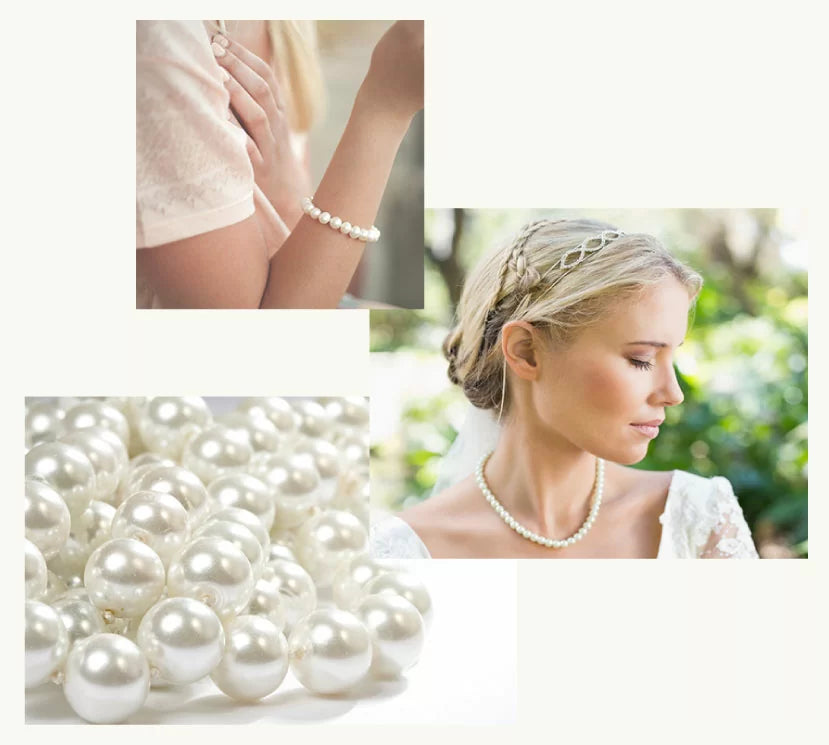
Understanding pearl grading requires knowledge of a basic terms used to evaluate quality. Most gems, besides pearls, are graded based on a universally accepted grading scale established by GIA, The Gemological Institute of America. For example, diamonds are graded based on the 4Cs which uses standard terminology to explain diamond grading. For the same reasons GIA introduced the 4Cs of diamond grading, GIA developed the Pearl Description System to provide consistent verbiage to define pearl traits that everyone can understand. The GIA Description System describes properties that all pearls, whether natural or cultured, saltwater or freshwater, have in common. Every pearl’s value is determined by considering seven properties called value factors. The seven value factors are luster, size, shape, surface, color, nacre quality and matching.
Pearl Quality Factors
The most important factor to determine the value of a pearl, luster refers to the intensity of light reflected and refracted from the surface of a pearl. The alignment and uniformity of the pearl’s crystalline structure will govern how light performs when it strikes the surface of a pearl. To recognize fine luster, look closely at the clarity of images that are reflected in the pearl’s surface. The closer to a mirror image you see, the better the luster.
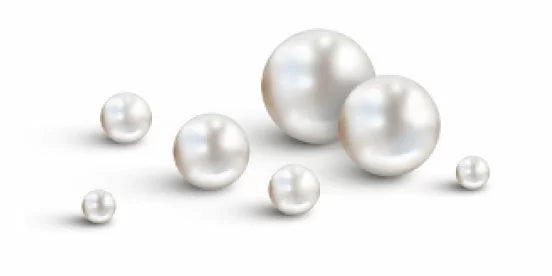
Typically, the larger the pearl, the more rare and costly it tends to be. But fine quality pearls can be small, and low quality pearls can be large, so a pearl’s ultimate worth depends on how it combines the complex mix of value factors.
Round is the most difficult shape to perfect so the rounder a pearl is, the rarer and more valuable it is. The goal is for a perfectly round pearl, though there is much more to pearls than an ideal orb. If all other value factors are equal, the rounder pearl, in general, will be the most highly valued.
The more flawless the surface of the pearl is, the higher it will be valued. However, a flawless pearl is only a one in a million occurrence, as pearls are the result of a natural process and an oyster will usually leave some sort of unique mark on the finished pearl. The number, nature and location of surface characteristics (abrasions, bumps, chips, cracks, etc.) can affect the value of any pearl.
Pearl color is an amalgamation of three categories. They are body color, overtone and orient. Orient refers to the spectrum of colors that shimmer and shine just beneath a pearl’s surface. Unlike the other factors, color is less influential on the actual value of a pearl. Traditionally, there is a rather consistent demand for the classic creamy tones of pearls. The rarest and most desired are the white rosé colored pearls.
A pearl is considered to have high-quality nacre based on the 4 elements of thickness, translucence, layer uniformity and layer alignment. It’s often assumed that thicker nacre equates with high quality and thin nacre equates with low quality, but neither is consistently true. Thick nacre that is not highly translucent, uniform or aligned is usually not very high quality. Although it might be durable, it will be deficient in luster. With thin nacre that ranks high in the other three elements, the pearls might be high quality in appearance only but not very durable. Thin nacre is more susceptible to chipping, cracking and peeling. For a pearl to be considered having excellent nacre quality, it must be highly translucent allowing for optimal refraction and reflection of light.
With all other factors considered equal, pearls in a strand must match for size, shape and color to blend harmoniously within the strand.
Japanese Akoya Pearls
Cultured pearls are categorized by whether they’re grown in saltwater or freshwater environments, by the species of mollusk that produces them, and by the geographical regions they’re grown. There are four major types of cultured pearls: Akoya, South Sea, Tahitian and Freshwater.
Akoya, South Sea and Tahitian cultured pearls are produced on saltwater pearl farms and the mollusks that produce them are called oysters. Akoya cultured pearls are produced in Japan, China, and Vietnam in the Pinctada fucata oyster. In the Japanese language, the common name for the oyster is Akoya, so the cultured pearls are also called Akoyas.
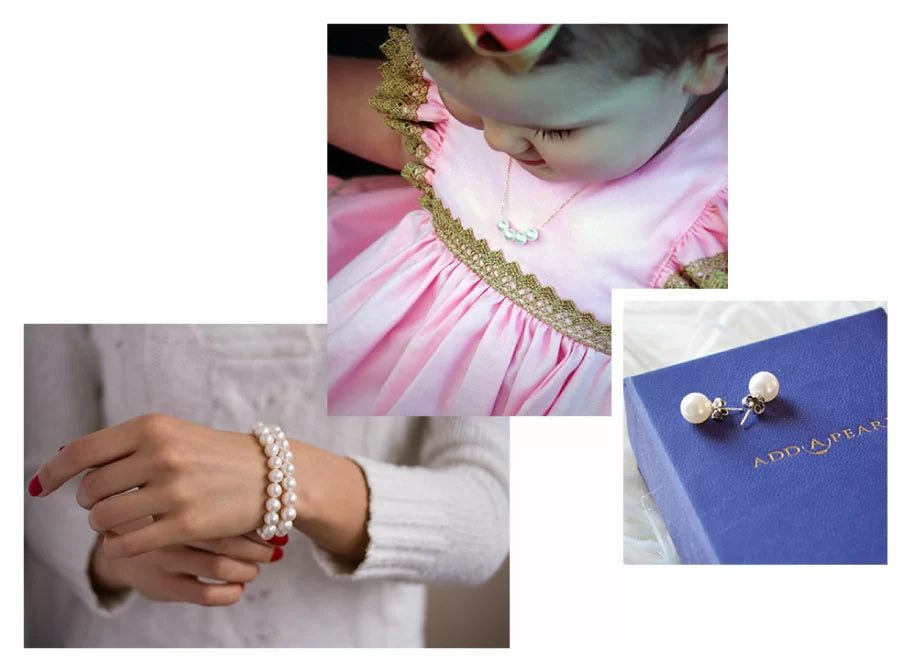
A saltwater Akoya cultured pearl is the confluence of human and nature. A small piece of mother-of-pearl shell is carefully rounded and inserted into the soft fleshy area of the host oyster. In attempt to relieve itself from the embedded particle, the oyster secrets a crystalline substance around the nucleus to form a pearl.
The crystalline nacreous layers are comprised of aragonite platelets bound together by an organic substance called conchiolin. The aragonite platelets unique ability to reflect and refract rays of light give pearls their captivating sheen and glow. The more tightly packed and uniformly aligned the crystal arrangement, the brighter the luster, iridescence and ultimately value of the pearls.
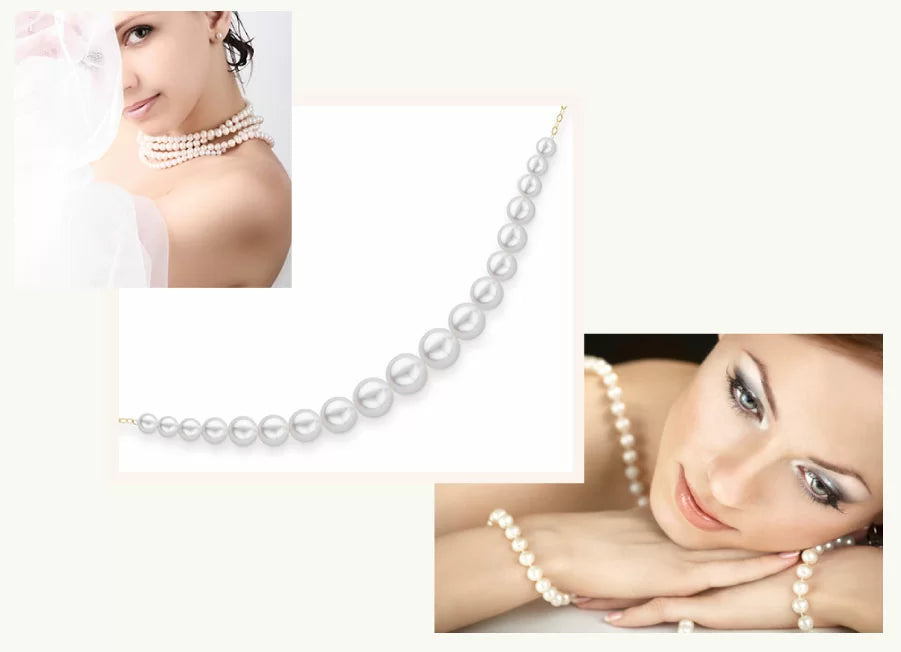
Akoya pearls are the most popular pearls that are commonly worn by women of all ages today. Known as the finest of all cultured pearls, Akoya is the traditional type of cultured pearl we think about brides wearing on their wedding day. Prized for their unsurpassed roundness and luster, Akoya pearls are the most luminous of all types of cultured pearls.
Luster is the most important value factor.
Of all the seven factors, luster has the most dramatic effect on value. It is the essence of a pearl and what gives a pearl supreme beauty.
Location Matters
Mollusks inhabiting cooler waters tend to deposit their nacreous layers more slowly and therefore exhibit greater translucence and higher lusters than those living in warmer waters. Warm water promotes faster developing nacre but the coating is often unaligned and what experts typically refer to as ‘soft’ or lacking excellent luster. Add-A-Pearls imports Akoya pearls from the cool saltwaters of Japan to ensure the finest quality pearls are always used in Add-A-Pearl necklaces.